Tending the Commons: Amateur Botanists and the Quiet Campaign to Protect Indigenous Plant Knowledge
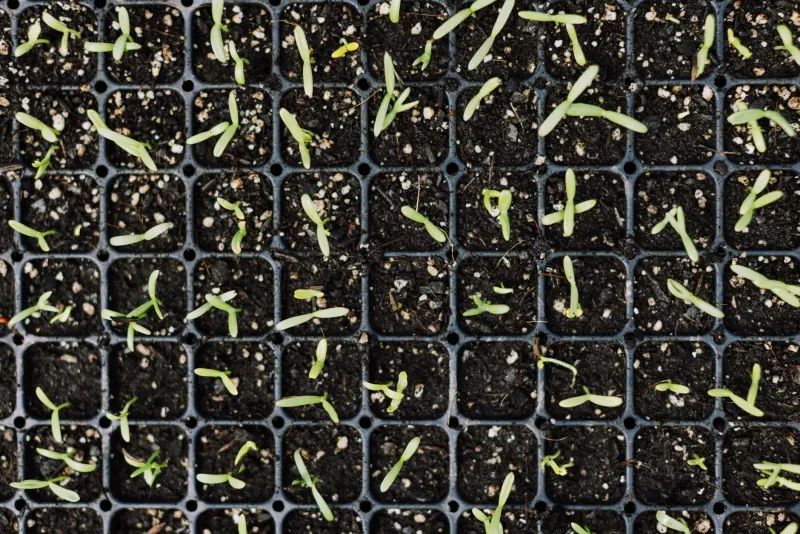
In a narrow side yard in Albuquerque, New Mexico, rows of desert marigold, osha root, and sacred datura grow alongside hand-labeled wooden stakes and laminated index cards detailing each plant's traditional uses. The gardener, a retired schoolteacher named Patricia Wren, has spent the past seven years cultivating this modest plot in direct collaboration with members of a nearby Pueblo community. She does not call herself a healer. She calls herself a steward.
"I'm not the keeper of this knowledge," Wren says carefully. "The community is. I'm just trying to make sure the plants don't disappear while we figure out how to pass the rest of it on."
Her approach—humble, deliberate, and grounded in relationship rather than extraction—represents one end of a widening spectrum of amateur botanical preservation work happening quietly across the country. From the Pacific Northwest to the Appalachian foothills, home gardeners, herbalists, and citizen scientists are cultivating Indigenous medicinal plants and documenting their traditional uses, often in direct partnership with tribal elders and community health practitioners. The results are as promising as they are complicated.
Living Archives in Raised Beds
The urgency driving these efforts is real. Many traditional medicinal plants face mounting pressure from habitat loss, climate disruption, and the erosion of intergenerational knowledge transmission. Formal botanical institutions—university herbaria, federal seed vaults, and research laboratories—have made significant contributions to plant conservation, but they often operate at a remove from the communities whose traditions they document. Physical specimens preserved in controlled environments cannot replicate the living, adaptive knowledge embedded in practice.
This gap is precisely where amateur botanists have begun to carve out a meaningful role. Community seed libraries in cities like Minneapolis, Tucson, and Portland now maintain dedicated collections of traditionally significant plants, often annotated with oral histories gathered directly from Indigenous knowledge holders. Some of these libraries operate in explicit partnership with tribal nations; others function more informally, relying on relationships built over years of shared cultivation.
In Washington State, a loose coalition of herbalists affiliated with a regional seed-saving network has spent the past decade documenting the medicinal uses of native plants in the Salish Sea region. Their archive—maintained partly on paper and partly through an open-access digital platform—now contains more than four hundred plant profiles, each cross-referenced with audio recordings of conversations with tribal members. The project coordinator, a landscape architect named Marcus Okafor, is careful to distinguish between documentation and ownership.
"The recordings belong to the people who made them," Okafor explains. "We hold them in trust. The community decides what gets published, what stays private, and what gets returned entirely."
The Ethics of the Garden
Not everyone in the Indigenous plant knowledge community views amateur botanical preservation with enthusiasm. The history of ethnobotany in the United States is inseparable from a longer history of extraction—of non-Indigenous researchers documenting, patenting, and profiting from traditional plant knowledge without meaningful consent or compensation from originating communities. That history casts a long shadow over even the most well-intentioned grassroots efforts.
Dr. Renée Swiftwind, an enrolled member of the Lakota Nation and an ethnobotanist at a tribal college in South Dakota, welcomes the energy of the amateur preservation movement but urges caution about its methods. "When someone outside the community decides what's worth saving and how to save it, that's still a form of control," she observes. "The question isn't just whether the plants survive. It's whether the people who carry the knowledge have sovereignty over how it's shared and used."
Swiftwind's concerns point toward a central tension in the grassroots preservation movement: the difference between collaboration and appropriation is not always self-evident, and good intentions do not automatically produce equitable outcomes. Some amateur botanists have responded by adopting formal protocols developed in partnership with tribal cultural departments—agreements that specify data sovereignty, attribution standards, and community veto rights over publication. Others operate without any such framework, relying on informal relationships that may or may not reflect the interests of the broader community.
The divergence in approach reflects a movement still working out its own ethics in real time.
Handwritten Knowledge, Living Roots
Despite these tensions, the material achievements of grassroots botanical preservation are difficult to dismiss. In southern Appalachia, where Cherokee plant traditions have been subject to centuries of displacement and disruption, a network of home gardeners affiliated with the United Plant Savers organization has helped restore populations of at-risk medicinal species including goldenseal, black cohosh, and bloodroot. Several of these gardeners work directly with Cherokee community members to maintain seed stocks and document preparation methods that might otherwise be lost within a generation.
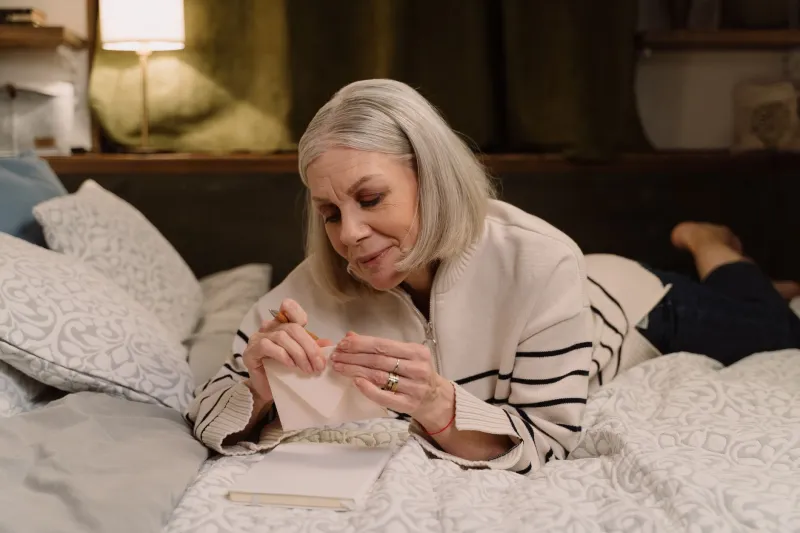
The documentation methods employed in these projects vary widely. Some groups maintain detailed handwritten journals—notebooks filled with sketches, preparation instructions, and seasonal cultivation notes that deliberately mirror the format of traditional knowledge transmission rather than the abstracted data fields of institutional databases. Others produce illustrated zines, recorded storytelling sessions, or annotated photographic collections. The diversity of format is itself a form of resilience: no single archive, however well-maintained, can substitute for the distributed, redundant character of living tradition.
What unites these varied efforts is a shared recognition that plants and knowledge are inseparable. A seed preserved without its story is an artifact. A story preserved without its plant is a memory. The most compelling work in this field holds both together.
Toward a More Accountable Stewardship
For Cultural Commons, the grassroots botanical preservation movement raises questions that extend well beyond horticulture. Who has the authority to preserve a tradition? What obligations accompany the act of documentation? And how do we build preservation practices that genuinely serve the communities whose knowledge is at stake, rather than the institutions or individuals who happen to hold the archive?
These are not new questions in the cultural preservation field. But they take on particular weight when the traditions in question belong to communities that have survived systematic attempts at erasure—communities for whom the stakes of misrepresentation or appropriation are not merely academic.
Patricia Wren, tending her Albuquerque garden, understands this. She spends as much time in conversation as she does in cultivation, checking in regularly with the Pueblo families whose knowledge informs her work, asking what they need rather than assuming she knows. The plants, she says, are the easy part. The relationships are what require the most careful tending.
"This knowledge doesn't belong in my garden," she says, turning over a handful of soil. "It belongs with the people who created it. The best I can do is keep the plants alive long enough for them to take it back."