Roots in the Soil, Stories in the Seed: America's Grassroots Seed Savers Are Rescuing Living History
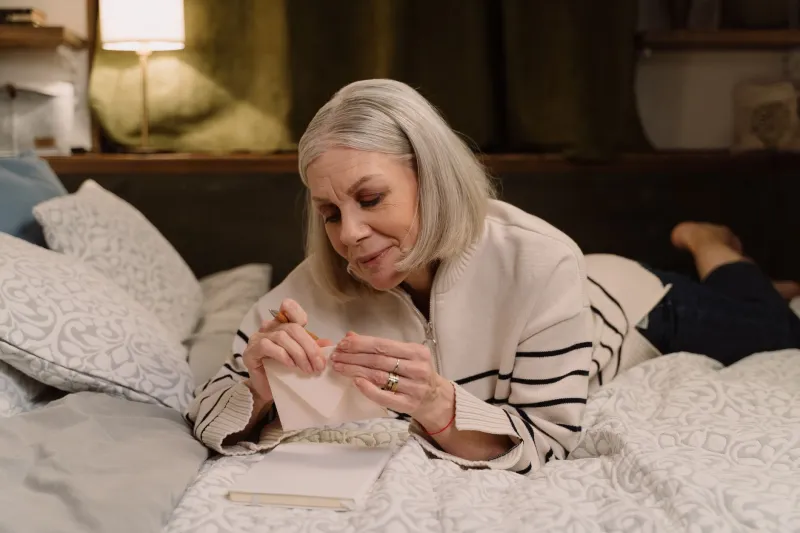
In a modest garage in Albuquerque, New Mexico, María Guadalupe Reyes keeps dozens of small paper envelopes organized in a repurposed recipe box. Each envelope is labeled in her careful handwriting: the variety name, the year it was grown, and—most importantly—where it came from. The Ancho Mulato pepper traces back to her grandmother's garden in Oaxaca. The speckled tepary bean arrived with a great-uncle who crossed the border in the 1960s. The purple-streaked corn was traded to her mother by a neighbor who no longer lives on the block.
Reyes is not a botanist. She does not hold a university appointment or a grant from an agricultural foundation. She is a retired schoolteacher who started saving seeds because she wanted her grandchildren to taste what she remembered. What she has quietly assembled, however, is something that food historians and cultural preservationists increasingly recognize as irreplaceable: a living archive of plant varieties tied to specific communities, specific migrations, and specific ways of knowing the land.
She is not alone.
A Movement Growing in the Margins
Across the United States, thousands of gardeners are engaged in the practice of seed saving—harvesting, drying, cataloguing, and trading seeds from open-pollinated plant varieties that have been cultivated for generations. Unlike hybrid or commercially patented seeds, which must be repurchased annually, heirloom seeds reproduce true to type. They carry, in their genetic structure, the accumulated selections of every gardener who grew them before.
The Seed Savers Exchange, founded in Iowa in 1975, estimates that it maintains a collection of more than 20,000 varieties, many of which exist nowhere else in the world. But the organization is quick to acknowledge that its formal library represents only a fraction of what is being preserved informally—in home gardens, church plots, and community seed libraries scattered across the country. These grassroots repositories are often more culturally specific, more deeply rooted in particular ethnic and regional traditions, and more vulnerable to loss.
In Appalachia, growers have maintained varieties of beans—Greasy Cutshorts, October beans, Mortgage Lifters—that date to the colonial era and beyond, passed down through families who could not afford to buy new seed each season. In the Rio Grande Valley, Indigenous and Mexican American farmers have stewarded corn varieties adapted to high-altitude desert conditions for centuries. In the South Carolina Lowcountry, descendants of enslaved Africans have preserved varieties of cowpeas and sorghum whose origins trace directly to West Africa, carried across the Atlantic in conditions of profound violence and loss.
Each of these seeds is, in a meaningful sense, a document.
The Archive That Feeds You
What distinguishes seed saving from other forms of cultural preservation is its insistence on living practice. A seed does not survive in a drawer. It must be grown, harvested, and grown again. The knowledge required to do this correctly—when to let the fruit fully ripen before harvesting, how to ferment tomato seeds to remove inhibitors, which varieties cross-pollinate and must be isolated—is itself a form of cultural knowledge that exists primarily in the hands and memories of experienced growers.
This is precisely why the loss of older gardeners represents an urgent preservation crisis. When a longtime seed keeper dies without having passed on their collection, the varieties they maintained may disappear entirely. The seeds dry out. The unlabeled envelopes are thrown away. The stories attached to them go unrecorded.
Community organizations are beginning to respond to this reality with structured intentionality. In Detroit, the D-Town Farm has integrated seed saving into a broader program of food sovereignty and cultural reclamation for Black residents who were systematically excluded from land ownership and agricultural participation for generations. In the Pacific Northwest, Hmong community gardens have become centers for preserving vegetable varieties brought from Southeast Asia by refugee families in the 1970s and 1980s—varieties that grocery stores do not carry and seed catalogs do not list.
The Agroecology and Rural Economics Research Corps, a nonprofit working across multiple states, has begun training community members in the dual practice of seed saving and oral history documentation, pairing the physical preservation of seeds with recorded interviews about their origins and cultural significance. The goal is to ensure that the envelope and the story survive together.
Genealogy in the Garden
For many seed savers, the practice has become inseparable from family history research. Tracking down a variety that a grandparent grew requires the same investigative instincts as tracing a genealogical line: letters to distant relatives, conversations with elderly neighbors, searches through agricultural extension records, and occasional breakthroughs that feel, by all accounts, like reunion.
Patricia Osei, a gardener and community organizer in Minneapolis, spent three years trying to locate a specific variety of okra her grandmother had grown in rural Georgia before migrating north during the Great Migration. She eventually found it through a seed swap at a historically Black church in Atlanta, where an elderly woman recognized the description immediately and sent her home with a small envelope of seeds wrapped in a paper towel.
"Growing it the first time was like meeting someone I'd only heard stories about," Osei said. "It wasn't just okra. It was proof that something survived."
This convergence of agriculture, genealogy, and cultural memory is what makes the seed saving movement so significant from a preservation standpoint. It is not merely about food security or biodiversity, though both of those concerns are legitimate and pressing. It is about the right of communities to maintain continuity with their own histories—to grow, literally, what their ancestors grew.
What Is at Stake
The urgency of this work cannot be overstated. According to the Food and Agriculture Organization of the United Nations, approximately 75 percent of the world's plant genetic diversity was lost during the twentieth century as industrial agriculture standardized crop varieties for yield, uniformity, and shelf life. What remains is often concentrated in formal seed banks that, whatever their scientific value, are not designed to keep cultural knowledge alive.
Grassroots seed savers fill a gap that no institution fully can. They maintain not just the seeds but the practices, the recipes, the planting calendars, the stories of how a particular variety came to be in a particular family's hands. They do this without funding, without recognition, and often without fully understanding the historical significance of what they are doing.
Supporting this work—through community seed libraries, documentation grants, intergenerational garden programs, and policy protections for seed sharing—is one of the most direct investments a society can make in the cultural commons. The seeds in María Reyes's recipe box are not relics. They are living records, waiting to be planted again.