The Moving Archive: How Some Ride-Share Drivers Are Turning Daily Shifts Into Immigration Oral Histories
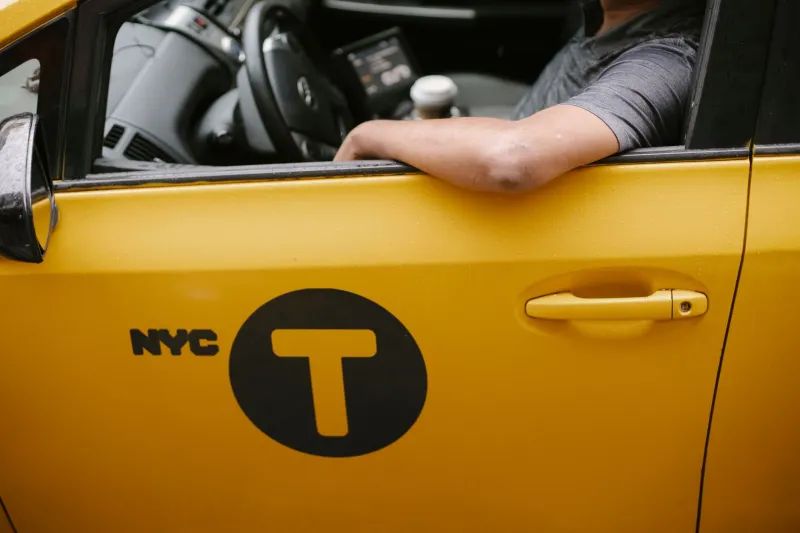
The conversation begins, as many do, with a question about where someone is from. The passenger, an older Guatemalan woman traveling from a medical appointment to her daughter's apartment in Queens, mentions the village she left behind twenty-three years ago. The driver, a Haitian-born man named Jean-Claude Desroches who has been driving for a major ride-share platform since 2019, asks a follow-up question. Then another. By the time they reach their destination, the woman has described in vivid detail the specific route she walked to cross the border, the name of the coyote who guided her group, the first American meal she ate, and the neighborhood in Jackson Heights where she spent her first winter in a city she found bewildering and magnificent in equal measure.
With her permission, Desroches has recorded the conversation on a small digital recorder he keeps in the center console. It will join more than two hundred other recordings he has made over the past three years—a sprawling, improvised oral history archive that documents the immigration experiences of passengers from more than forty countries.
"I'm not a historian," Desroches says. "But I come from a family of storytellers. And I realized that the stories people tell in cars—they're different from the stories people tell anywhere else."
The Confession Booth on Wheels
There is something about the architecture of the ride-share car that loosens the tongue. The physical arrangement—driver facing forward, passenger in the back, neither required to maintain eye contact—creates a peculiar intimacy. The journey has a defined beginning and end. The relationship is transactional but not impersonal. And the driver, occupying a curious social position that is simultaneously service worker and confidant, often becomes the recipient of disclosures that passengers might not make to friends or family.
Social scientists have noted this phenomenon in related contexts: taxi drivers, bartenders, and hairdressers have long functioned as informal therapists and confessors. What is distinctive about the current moment is that some drivers are consciously leveraging this dynamic for purposes of cultural documentation—recognizing that the stories passing through their vehicles constitute a form of living archive that no formal institution is equipped to capture.
The immigration narrative is particularly well-suited to this format. Migration stories are rarely linear, and they are rarely told in their entirety to any single listener. A family member hears one version; an immigration official hears another; a doctor or social worker hears fragments of a third. The car ride, with its enforced proximity and its compressed time frame, can sometimes produce a version that is more complete and more candid than any of these.
"People tell me things they've never told their children," says Marisol Fuentes, a Mexican-born driver in Chicago who began recording passenger stories after a conversation with a ninety-year-old Sicilian woman whose account of her family's immigration in the 1930s moved her to tears. "I think it's because I'm a stranger. I'm safe. I'm going to drop them off and they'll never see me again."
Consent, Custody, and the Ethics of Informal Documentation
The ethical dimensions of this practice are neither simple nor settled. The question of consent is primary: passengers who share personal information in what they understand to be a private conversation may not anticipate that their words will be preserved in an archive, however informal. Desroches and Fuentes both describe asking explicit permission before recording, but not all drivers who engage in this practice maintain the same standard. And even explicit consent, obtained in the moment before a journey, does not fully address questions about how recordings will be used, who will have access to them, and whether passengers retain any rights over their own stories once they have been captured.
These concerns are amplified by the vulnerability of many immigrant passengers. Undocumented individuals, asylum seekers, and people with precarious immigration status face real risks if their stories—however carefully anonymized—fall into the wrong hands. The informal, unregulated character of driver-led oral history projects means that there is no institutional framework governing data security, attribution, or the long-term stewardship of recordings.
Dr. Yolanda Restrepo, a historian of migration at a New York university who has followed the emergence of driver-led oral history projects with interest, sees genuine archival value in these recordings but urges caution about their limitations. "These conversations capture something real and important," she acknowledges. "But a recording made without a rigorous consent framework, without community oversight, without archival protocols—that's not an archive. That's a collection. And collections can be lost, misused, or appropriated."
Restrepo's concern points toward a broader challenge in the democratization of oral history: the tools of documentation have become radically accessible, but the ethical and institutional frameworks that give documentation its meaning have not kept pace.
From Front Seat to Formal Archive
Some driver-historians are attempting to bridge this gap by connecting their informal projects to established cultural institutions. In Los Angeles, a collective of ride-share drivers calling themselves Voces en Movimiento—Voices in Motion—has partnered with a community oral history organization to develop a consent protocol and a secure digital repository for their recordings. The partnership has brought professional archival expertise to the project while preserving the drivers' central role as interlocutors and community members.
In Boston, a Somali-born driver named Faadumo Warsame has collaborated with a local public library's oral history program to donate a selection of recordings—all made with explicit, documented consent—to the library's permanent collection. The recordings have been cataloged, transcribed, and made available to researchers, while the original subjects retain the right to withdraw their contributions at any time.
These models suggest that the raw material being gathered in ride-share vehicles can, with appropriate care and institutional support, become genuine contributions to the historical record. The granular, unfiltered quality of car-seat conversation—the specific names of border towns, the prices paid to smugglers, the first English phrases memorized, the foods that triggered homesickness—contains a texture of lived experience that more formal oral history projects sometimes struggle to elicit.
Stories That Belong to Themselves
What unites the most thoughtful practitioners of this informal archival form is a recognition that the stories they collect are not theirs to own. Jean-Claude Desroches keeps his recordings in a locked hard drive and consults regularly with a Haitian community organization about how to manage them responsibly. He has declined several requests from journalists and documentary filmmakers who have expressed interest in the material. "These aren't my stories to sell," he says. "They were given to me in trust."
That sense of stewardship—imperfect, improvised, but genuine—is what distinguishes the most valuable work in this emerging field from its more extractive counterparts. The ride-share car, for all its corporate infrastructure and algorithmic management, can become, in the right hands, a space of genuine cultural exchange: a moving commons where stories find temporary shelter before they are carried, carefully, into the longer life of the archive.
The road, in other words, can be a form of preservation. You simply have to know how to listen.