Sewn Into the Record: Black Women Quilters Are Building Textile Archives One Stitch at a Time
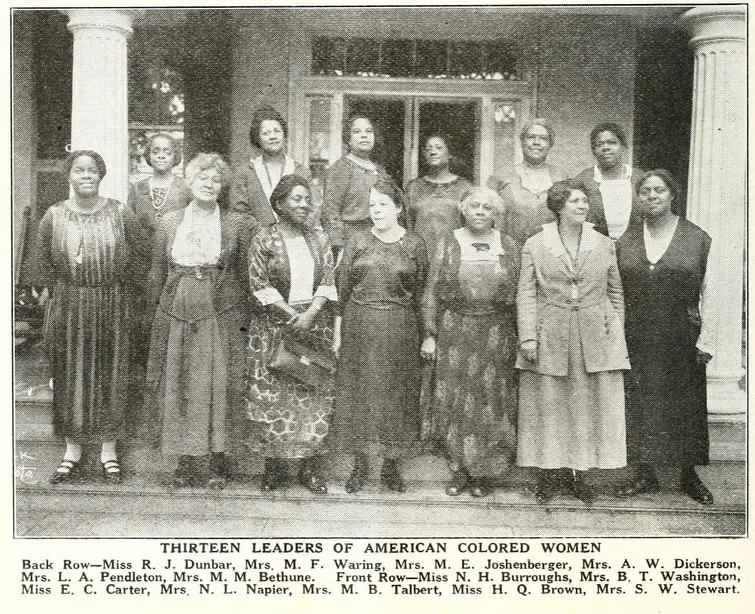
Photo: Unknown authorUnknown author, Public domain, via Wikimedia Commons
In a church fellowship hall in Gee's Bend, Alabama — a small, geographically isolated community whose quilting tradition is now recognized among the most significant in American art history — a group of women gathers on the third Saturday of every month. They bring needles, fabric scraps, and something harder to quantify: stories that exist nowhere else.
These are not hobbyists pursuing a leisurely craft. They are, by any rigorous definition, archivists.
"Every block in this quilt tells you where my grandmother walked," says Loretta Pettway Bennett, a third-generation quilter whose family's work has been exhibited at the Smithsonian. "The colors she chose, the way she set the pieces — that's a document. That's evidence of a life."
Across the country, from the Mississippi Delta to Detroit's west side, from rural Georgia to the South Side of Chicago, African American women are engaged in a quiet but consequential effort to transform quilt-making from a domestic practice into a formalized system of historical record-keeping. They are doing so with growing support from archivists, digital humanists, and cultural preservation organizations who have come to recognize what scholars of material culture have argued for decades: that textiles can carry historical information with the same authority — and in some cases, greater intimacy — than written documents.
Fabric as Primary Source
The relationship between African American quilting and historical memory is not new. Scholars such as Gladys-Marie Fry and Kyra Hicks have spent careers documenting the ways enslaved Black women encoded resistance, kinship networks, and spiritual knowledge into textile work that white enslavers often dismissed as mere domestic labor. The so-called "quilt code" theory — the contested but widely discussed idea that specific quilt patterns may have been used to communicate information along the Underground Railroad — has drawn both popular fascination and serious academic scrutiny.
Regardless of where one stands on the Underground Railroad quilt debate, the broader point is not in dispute: African American women have long used textile production as a medium for preserving knowledge that had no safe or accessible written channel.
What is new is the institutional momentum behind treating these objects accordingly.
The Souls Grown Deep Foundation, based in Atlanta, has spent more than two decades acquiring and preserving works by Southern Black vernacular artists, including quilters from the Gee's Bend tradition. More recently, organizations such as the African American Quilt Circle of Durham, North Carolina, and the National Quilt Museum in Paducah, Kentucky, have begun developing formal protocols for quilts as archival objects — cataloging not just the visual composition, but the oral histories attached to individual pieces, the provenance chains, and the social contexts in which they were made.
"We've been behind on this," admits one regional archivist affiliated with a historically Black university in the Southeast, who asked not to be named pending publication of her institution's new acquisition policy. "We cataloged quilts as art objects or as craft. We didn't always treat them as we would a letter or a deed. That's changing, but not fast enough."
Digitizing the Irreplaceable
The urgency behind the current preservation push is partly demographic. Many of the women who hold the deepest knowledge of family quilt traditions — who can read a pattern the way a musicologist reads a score — are in their seventies, eighties, and beyond. When they go, they take with them interpretive frameworks that no database can reconstruct.
Several organizations are racing to close that gap. The Quilt Index, a collaborative digital archive maintained through a partnership between Michigan State University and the Alliance for American Quilts, now holds records on more than 80,000 quilts, with an active initiative to expand its holdings of African American family quilts. Submitters are encouraged to include audio and video documentation alongside high-resolution images — an acknowledgment that the textile alone is insufficient without the voice that can explain it.
In Chicago, the Black Women's Quilt Collective has been conducting what its members call "stitch sessions with a recorder running" — informal gatherings where quilters narrate the history of pieces brought in by family members, creating oral history recordings that are then linked to photographic documentation of the quilts themselves.
"My aunt made this quilt the year she left Mississippi," says one participant, spreading a faded indigo-and-white double wedding ring pattern across a folding table. "Every person who got a piece of this fabric was someone she was leaving behind. She couldn't write that down. But she sewed it in."
The collective has partnered with a local university library to ensure that these recordings meet archival standards — properly formatted, backed up to multiple servers, and deposited in collections that will remain accessible to descendants and researchers long after the original quilts have aged beyond display.
Resistance, Migration, and the Geography of Cloth
Among the most historically significant categories of quilts now being documented are those that trace the Great Migration — the decades-long movement of millions of Black Americans from the rural South to Northern and Western cities between roughly 1910 and 1970. Quilters who made the journey often brought fabric from their home communities, incorporating it into new work made in Chicago, Detroit, Cleveland, or Oakland. The resulting objects are, in effect, geographic documents: a map of displacement rendered in cotton and thread.
Dr. Carolyn Mazloomi, founder of the Women of Color Quilters Network and one of the most respected voices in African American textile scholarship, has argued forcefully that these migration quilts deserve the same curatorial attention as the letters and photographs that historians have traditionally used to reconstruct the Great Migration experience.
"When a woman cuts a piece of her mother's church dress and sews it into a quilt she makes in a Detroit apartment, that's a primary source," Mazloomi has written. "It tells you about grief, about continuity, about what she chose to carry and what she had to leave."
Her network, which connects quilters across more than thirty states, has been instrumental in developing community-based documentation standards that honor the cultural protocols of the makers themselves — ensuring, for instance, that certain quilts made for spiritual or ceremonial purposes are documented in ways that respect the communities' own decisions about access and disclosure.
The Question of Ownership
That last point touches on one of the more complex tensions in the current preservation movement: the question of who controls the archive.
Historically, African American cultural objects have too often been preserved in institutions that held little accountability to the communities that produced them. Quilts have been donated to university collections, acquired by museums, or sold at auction in ways that severed them from the family histories they encoded. Descendants have sometimes discovered their grandmothers' work in institutional storage, inaccessible and misattributed.
The quilters and archivists driving the current movement are deliberate about building preservation structures that keep community authority central. Many of the digital archives being developed are designed with tiered access — making basic catalog information publicly available while restricting detailed family narratives to verified descendants or community members.
"Preservation isn't neutral," says one archivist working with a Southern quilting collective. "It's always a decision about whose story gets told, and on whose terms. We're trying to make sure the women who made these quilts — and their families — stay at the center of that decision."
A Living Archive
Perhaps the most compelling aspect of this movement is that it does not treat quilting as a relic to be rescued from obsolescence. Younger Black women are learning the tradition in growing numbers, and many are explicitly framing their practice as an act of archival continuation — adding new blocks to existing family quilts, making pieces that document contemporary experiences of racial violence, migration, and resilience.
In this sense, the archive is not closed. It is being written in real time, in fabric and thread, by women who understand that the most durable records are sometimes the ones that can be touched.
For Cultural Commons, that is precisely the point. Preservation is not only about protecting what has already been made. It is about sustaining the conditions under which communities can continue to make meaning — and ensuring that the knowledge stitched into every seam finds its way, intact, to the hands that will need it next.