The Last Speakers: How Linguists and Local Communities Are Fighting to Save America's Endangered Dialects
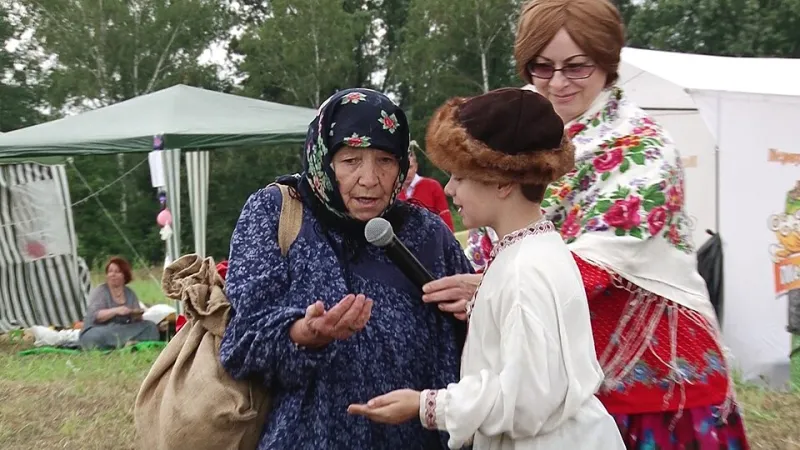
Photo: Max Kuznetsov (photographer), Inna Ismailova (producer), CC BY-SA 4.0, via Wikimedia Commons
In a small community center on St. Helena Island, South Carolina, an elderly woman named Cornelia speaks in a cadence that sounds, to the untrained ear, almost like a foreign language. Her sentences rise and fall with a musicality rooted in West African linguistic traditions, her vocabulary drawing from Yoruba, Mende, and Twi as much as from English. She is a native speaker of Gullah — one of the most historically significant and most endangered creole languages in the United States. And she is acutely aware that the world she speaks into existence with every sentence is growing smaller.
"My grandchildren understand me," she says through a smile that carries equal parts pride and sorrow. "But they don't speak back to me the same way."
This quiet generational rupture is playing out across the country. From the Outer Banks of North Carolina to the Ozark Mountains of Missouri, from the bayous of Louisiana to the former mining towns of eastern Kentucky, America's rich tapestry of regional dialects is unraveling thread by thread. Linguists, archivists, and community organizations are now racing against time — and against the relentless homogenizing pressure of mass media, geographic mobility, and economic displacement — to document what remains.
A Language Is More Than Words
The urgency of this work extends well beyond academic interest. Linguists who study language endangerment are quick to emphasize that a dialect is not merely a collection of pronunciations and idioms. It is, rather, a living repository of history, ecology, social structure, and collective identity. When a dialect fades, so too does an entire framework for understanding the world.
Dr. Patricia Nichols, a sociolinguist who has spent decades studying Gullah, describes the language as "an archive that walks and breathes." Embedded within its grammar are traces of the Middle Passage, of rice cultivation techniques, of religious syncretism, of resistance and survival. No written document can fully replicate what a fluent speaker carries in their voice.
Similarly, Appalachian English — often dismissively caricatured in mainstream American culture — preserves grammatical forms and vocabulary that date to Elizabethan England. Phrases dismissed as rural "mistakes" are, in fact, linguistic fossils: evidence of how English was spoken four centuries ago, preserved in geographic isolation long after those forms disappeared from the broader language. To lose Appalachian English is to lose a living connection to early modern speech.
Field Recorders and Community Volunteers
The methodology of dialect preservation has changed dramatically over the past two decades. Where earlier generations of fieldworkers arrived in communities as outside experts — often extracting recordings with little benefit returned to local people — contemporary preservation efforts are increasingly collaborative and community-centered.
The Endangered Language Fund, along with university-based programs at institutions such as the University of Georgia and Appalachian State University, has begun training local residents to conduct their own documentation work. Volunteers receive instruction in basic audio recording techniques, interview methodology, and metadata cataloguing. They then return to their own families and neighborhoods, capturing conversations, stories, songs, and everyday speech in contexts that outside researchers could never access.
The results are often more nuanced and more intimate than anything a professional fieldworker could produce. A granddaughter recording her grandmother's account of a church homecoming, a teenager capturing his uncle's fishing stories — these recordings carry an authenticity and a warmth that transforms an archive from a cold institutional collection into something genuinely communal.
Technology has accelerated these efforts considerably. Smartphone microphones, while imperfect, are now capable of capturing sufficient audio quality for linguistic analysis. Cloud-based storage platforms allow communities to maintain their own copies of recordings, rather than depending entirely on university libraries or federal archives. Applications such as ELAR (Endangered Languages Archive) and Mukurtu — the latter designed specifically with indigenous community sovereignty in mind — offer tools for organizing and sharing materials while allowing communities to control access.
The Gullah Geechee Corridor and the Fight for Recognition
For the Gullah Geechee people, language preservation is inseparable from a broader struggle for cultural and political recognition. The Gullah Geechee Cultural Heritage Corridor — a federally designated region stretching across coastal areas of North Carolina, South Carolina, Georgia, and Florida — represents one of the most significant governmental acknowledgments of an African American cultural landscape in the country's history.
Within that corridor, organizations such as the Gullah Geechee Cultural Heritage Corridor Commission and the Penn Center on St. Helena Island have worked for years to document and revitalize the language. Their efforts include oral history projects, school curriculum development, and public programming designed to shift community attitudes toward Gullah from shame to pride.
That shift in attitude is, many linguists argue, the most critical variable in language survival. Economic and social stigma have historically driven speakers to abandon their native dialects in pursuit of upward mobility. When communities begin to reclaim their linguistic heritage as a source of dignity rather than embarrassment, the conditions for revitalization become possible.
"We're not just recording a language," says one coordinator with a Lowcountry preservation initiative. "We're recording a people's sense of who they are."
Indigenous Language Variations and the Complexity of Endangerment
The situation is considerably more acute for indigenous language communities, where the line between dialect preservation and outright language survival is often vanishingly thin. Across the continental United States, hundreds of indigenous languages — many with only a handful of living speakers — exist in varying states of endangerment. Within those languages, regional and community-specific variations face additional layers of vulnerability.
Tribal nations including the Muscogee (Creek) Nation, the Eastern Band of Cherokee Indians, and numerous California tribes have developed their own language revitalization programs, often combining master-apprentice models — pairing fluent elders with younger learners in intensive one-on-one immersion — with classroom instruction and digital media production.
Young indigenous filmmakers and podcasters are increasingly creating content in their heritage languages, producing a body of contemporary media that demonstrates, powerfully, that these languages are not relics but living vehicles for modern expression. Such projects serve a dual purpose: they create new speakers and listeners while simultaneously generating archival materials that future generations can access.
What Remains to Be Done
Despite the genuine progress being made, the challenges are formidable. Funding for dialect documentation remains chronically insufficient. University linguistics departments face pressure to prioritize research with broader commercial applications. Community organizations operate on shoestring budgets, relying heavily on volunteer labor and short-term grants.
Perhaps most urgently, the window for documentation is narrowing. The generation of speakers who acquired their dialects naturally — without the influence of television, the internet, or widespread geographic mobility — is aging. Every year, voices are lost that cannot be recovered.
Cultural Commons believes that this work belongs not only to specialists but to all of us who understand that the diversity of human expression is a common inheritance worth protecting. Supporting organizations engaged in dialect preservation — whether through financial contributions, volunteer hours, or simply by listening to and sharing the recordings that already exist — is an act of cultural stewardship available to anyone.
Cornelia, back on St. Helena Island, ends our conversation with a Gullah proverb that her mother taught her, one that does not translate cleanly into standard English. That untranslatability is precisely the point. Some things can only be said in one language, in one voice, shaped by one particular history. The task before us is to ensure that voice is not the last.