Neighbors as Narrators: The Amateur Historians Rewriting Their Communities From the Ground Up
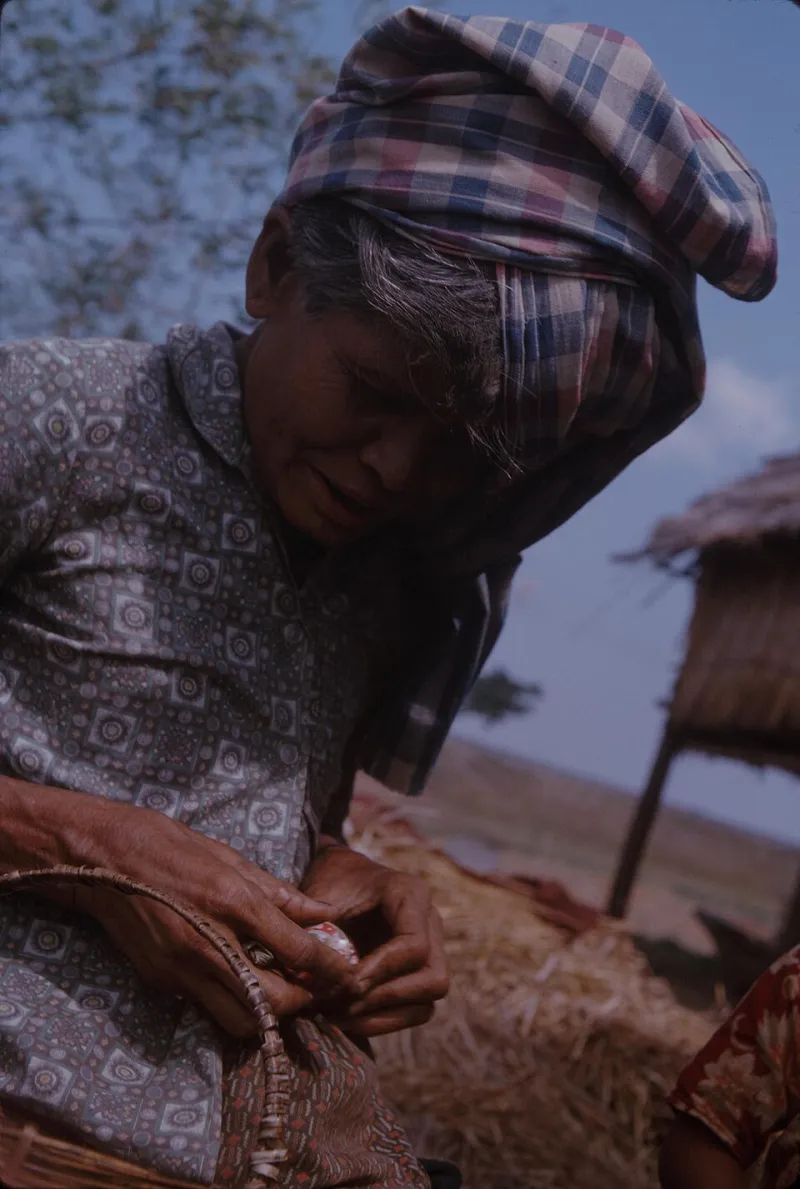
Photo: Carlquist, Sherwin John, 1930-2021, CC BY 4.0, via Wikimedia Commons
In a modest home office in Birmingham, Alabama, a retired schoolteacher named Carolyn Reeves spends her evenings cross-referencing census records with digitized church bulletins and handwritten deed transfers. She is not a professional historian. She holds no university affiliation and receives no institutional funding. What she possesses, however, is something equally powerful: an intimate knowledge of the neighborhood where she was born, a deep commitment to the people whose names have been erased from conventional accounts, and access to a constellation of digital tools that would have seemed extraordinary to researchers just two decades ago.
Reeves is part of a rapidly expanding movement of amateur genealogists and community history enthusiasts who are fundamentally transforming how Americans understand the places they inhabit. Drawn together by shared curiosity, ancestral connections, and a growing awareness that official archives have often failed to document the experiences of marginalized communities, these citizen researchers are filling historical gaps with a rigor and passion that many professional institutions have struggled to match.
The Tools of a New Kind of Scholarship
The democratization of genealogical research has been nothing short of remarkable. Platforms such as Ancestry.com, FamilySearch, and MyHeritage have placed digitized records — census data, immigration manifests, military pension files, naturalization papers — within reach of anyone with an internet connection. Meanwhile, DNA testing services have allowed individuals to identify biological relatives across generations, sometimes reconnecting families separated by adoption, migration, forced displacement, or the deliberate obscuring of ancestry under systems of racial oppression.
For communities whose histories were systematically excluded from local archives — Black Americans, Indigenous peoples, immigrant enclaves, LGBTQ+ communities — these tools have opened extraordinary new avenues of discovery. Genealogists in cities like Detroit, New Orleans, and Chicago are recovering the names and life trajectories of individuals who appeared in the historical record only as property entries, unnamed laborers, or statistical categories. Each recovered name represents not merely a data point but a restored human presence.
Public records, too, have become critical instruments. Probate filings, land surveys, city directories, and newspaper archives — many of them now searchable online through state libraries and university digitization projects — allow researchers to trace the social and economic contours of neighborhoods across time. Where these documents are unavailable digitally, community historians are visiting county courthouses and local historical societies in person, sometimes photographing fragile records with their own smartphones.
Oral History as Living Archive
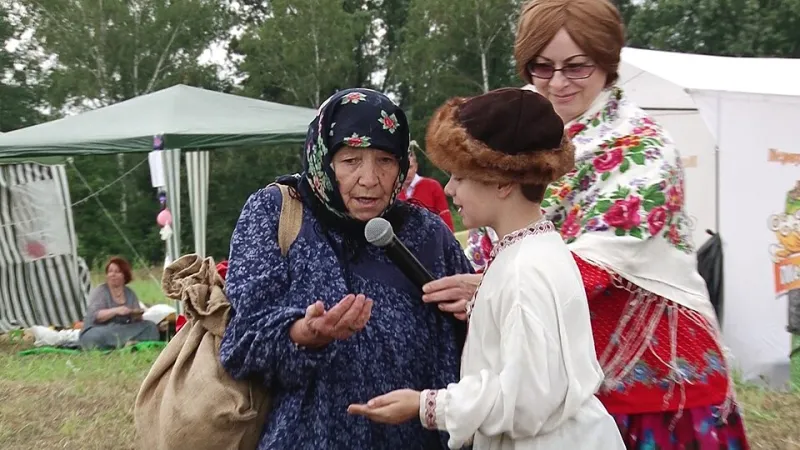
Yet documents alone cannot capture everything. Alongside their archival work, many citizen researchers are conducting oral history interviews with elderly community members, preserving firsthand accounts that no database can replicate. In rural Appalachia, volunteers affiliated with local heritage organizations are recording the recollections of residents who remember industries, landscapes, and social customs that have entirely disappeared. In urban neighborhoods undergoing rapid gentrification, community members are documenting the memories of long-term residents before displacement scatters those voices beyond reach.
The methodology, while informal by academic standards, is frequently rigorous in practice. Many amateur historians have educated themselves in oral history best practices through resources provided by organizations such as the Oral History Association. They understand the ethical responsibilities involved in collecting testimony — the importance of informed consent, the need to represent complexity and contradiction, and the obligation to return findings to the communities from which they were gathered.
This last point is where citizen history diverges most meaningfully from traditional scholarship. Rather than depositing their work in distant institutional repositories, many community researchers are creating local archives — neighborhood history websites, self-published zines, community murals, and annotated walking tours — that make their findings directly accessible to the people whose stories they tell.
Uncovering What Official Narratives Left Out
The stories emerging from this movement are frequently unsettling, and intentionally so. In dozens of American cities, amateur researchers have documented the precise mechanisms by which redlining, urban renewal, and discriminatory zoning policies dismantled thriving communities of color. They have identified the locations of forgotten Black business districts, Japanese American farms seized during World War II internment, and Indigenous burial grounds paved over during mid-century development booms.
These discoveries carry consequences that extend well beyond the historical record. In several instances, citizen-led research has provided the evidentiary foundation for formal reparations discussions, landmark preservation campaigns, and legal challenges to municipal policies. When a group of community historians in Tulsa, Oklahoma, contributed genealogical documentation to the ongoing investigation of the 1921 Greenwood Massacre, they demonstrated that amateur scholarship could produce findings with direct policy implications.
The emotional dimensions of this work are equally significant. For many participants, uncovering a grandparent's migration route or identifying the precise street corner where a great-great-grandmother operated a business produces a form of recognition — an affirmation that one's family and community have always mattered, even when official history suggested otherwise.
Building Community Through Shared Investigation
Perhaps the most underappreciated dimension of the citizen history movement is its capacity to forge new social bonds. Neighborhood history projects routinely bring together residents of different generations, backgrounds, and political persuasions around a common purpose. The shared act of investigation — poring over old photographs, debating the interpretation of conflicting records, tracking down the descendants of individuals who appear in historical documents — creates a kind of collaborative intimacy that few other community activities can replicate.
Libraries and community organizations have begun to recognize this potential, offering genealogy workshops, digitization days, and community archive-building programs that lower the barriers to participation. The Schomburg Center for Research in Black Culture in New York City, the Newberry Library in Chicago, and countless public library systems across the country have developed programming specifically designed to support and amplify the work of community researchers.
Nonprofit organizations focused on cultural preservation have an important role to play in sustaining and scaling this work. Providing training resources, facilitating connections between community researchers and professional archivists, and advocating for the digitization of records that document underrepresented populations are all areas where institutional support can make a meaningful difference.
History as an Act of Solidarity
What ultimately distinguishes the citizen history movement is its understanding of historical knowledge as a form of communal property rather than an academic commodity. The stories these researchers are recovering do not belong to any single institution or discipline. They belong to the neighborhoods, families, and communities from which they emerged — and to the broader public whose understanding of American life is impoverished without them.
For Cultural Commons, the work of these backyard historians represents precisely the kind of grassroots cultural stewardship that formal institutions have too often failed to provide. In recovering overlooked voices, challenging sanitized official narratives, and building new forms of community connection through shared inquiry, these citizen researchers are doing something profound: they are insisting that every life, every neighborhood, and every community deserves to be remembered with honesty and care.
That insistence, quiet and persistent and carried out one document at a time, is itself a form of advocacy — and one of the most meaningful contributions any of us can make to the commons we share.