Beyond the Recipe Card: The Race to Document Black American Culinary Knowledge Before It Disappears
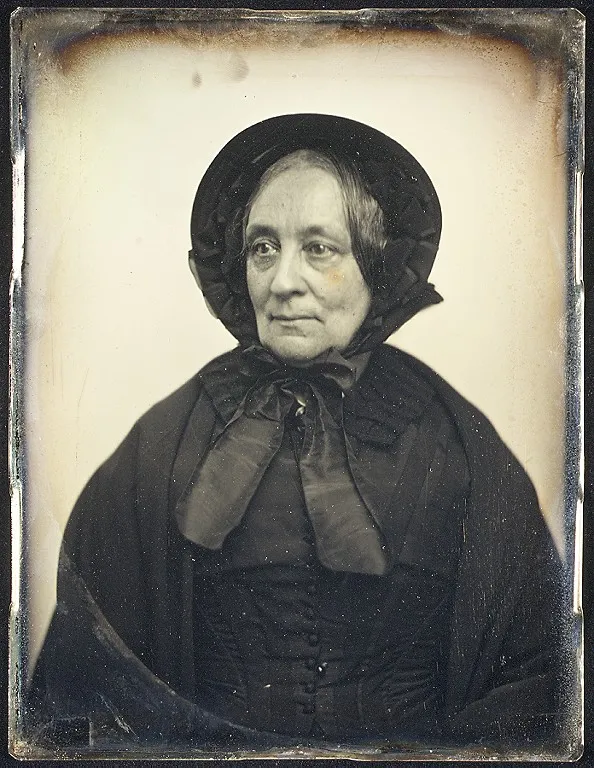
Photo: Albert Southworth / Josiah Johnson Hawes / Southworth & Hawes, CC0, via Wikimedia Commons
There is a particular kind of knowledge that lives in the hands. It resides in the practiced motion of a grandmother folding lard into biscuit dough, in the confident pinch of seasoning that no kitchen scale has ever measured, in the instinctive judgment of a cook who knows a pot of field peas is ready not by the clock but by the sound of the simmer. For generations of Black American families, this is how culinary tradition has traveled — body to body, kitchen to kitchen, voice to voice.
But that chain of transmission is under serious strain. As urbanization, economic displacement, and generational distance reshape American family life, the informal apprenticeships that once preserved these techniques are growing rarer. The grandmothers are aging. The kitchens are smaller. The time is shorter. And the recipes, when written down at all, too often arrive stripped of the context, the commentary, and the cultural memory that made them meaningful in the first place.
Food historians and community organizations are now treating this as the preservation emergency it is.
What a Written Recipe Cannot Hold
The limitations of the conventional cookbook as a preservation tool are not incidental — they are structural. A recipe communicates ingredients and sequence. It cannot communicate the reason a particular cut of pork was chosen not for flavor alone but because it was what could be afforded, and then transformed into something extraordinary through technique and necessity. It cannot convey the social ritual of a dish: who made it, for which occasions, under what circumstances, and what it meant to the people who gathered around it.
Dr. Jessica Harris, one of the foremost scholars of the African Atlantic culinary diaspora, has spent decades arguing that Black American food must be understood as a living archive of history — one that encodes the experience of enslavement, migration, resistance, and community formation. To document only the ingredients is to preserve the shell while discarding the meaning.
This is the challenge that organizations like the Southern Foodways Alliance, based in Oxford, Mississippi, have worked to address through oral history methodology. Rather than soliciting recipes, their interviewers ask cooks to narrate — to explain the sourcing of heirloom ingredients, to describe the seasonal rhythms of their cooking, to recount who taught them and what was said. The result is a form of documentation that treats culinary knowledge as cultural testimony.
The Geography of a Cuisine
Black American food is not monolithic, and any preservation effort that treats it as such risks its own form of erasure. The Gullah Geechee foodways of the South Carolina and Georgia Lowcountry, shaped by West African agricultural knowledge and the ecology of the coastal islands, are distinct from the Creole traditions of New Orleans, which are in turn distinct from the soul food of the Mississippi Delta, the pit barbecue traditions of the Carolinas, or the fish fry culture of Chicago's South Side.
Each regional tradition carries its own ingredient vocabularies, its own techniques, its own seasonal logic. Preserving them requires not a single initiative but a network of locally rooted efforts, each attentive to the particular geography and history that shaped the food.
The Gullah Geechee Cultural Heritage Corridor, established by federal legislation in 2006, has worked to recognize and protect the cultural practices of one of the most distinctive African-descended communities in the United States. Food is central to that work. The cultivation of Sea Island red peas, the preparation of rice dishes that trace directly to West African culinary traditions, the knowledge of which wild plants are edible and which are medicinal — these are not peripheral details but core elements of a cultural identity that colonization, enslavement, and ongoing economic pressure have repeatedly threatened to sever.
The Urgency of the Oral Record
Community organizations working in this space have increasingly turned to oral history methodology not as a supplement to written documentation but as its foundation. Audio and video recordings of elder cooks — in their own kitchens, using their own language, demonstrating their own techniques — capture dimensions of knowledge that no written transcription can fully replicate.
Projects like the Black Food Sovereignty Coalition have emphasized that documentation must be community-controlled to be meaningful. When outside institutions arrive to "preserve" a food tradition, the resulting archive often ends up housed in a university library or a museum collection, accessible to researchers but disconnected from the community whose knowledge it represents. Genuine preservation, advocates argue, means returning that documentation to the people it came from — digitizing recordings for family archives, supporting community-run repositories, and ensuring that the knowledge remains in conversation with living practice rather than calcifying into historical artifact.
This principle — that preservation is not extraction — has become a guiding ethic for the most thoughtful work in this field.
Teaching the Next Generation
Documentation alone, however, cannot substitute for transmission. Several organizations have recognized that the most durable form of preservation is an ongoing practice, and they have invested accordingly in programs that bring young people into direct contact with elder knowledge holders.
The Sankofa Community Development Corporation in Atlanta has developed culinary education programming that pairs youth from the city's historically Black neighborhoods with elder cooks, creating structured opportunities for the kind of kitchen apprenticeship that once happened naturally across generations. Similar models have emerged in cities including Detroit, Baltimore, and Philadelphia, each tailored to the specific food traditions of its local Black community.
These programs carry an explicit cultural argument: that Black culinary knowledge is not a quaint relic but a sophisticated intellectual and artistic tradition worthy of the same institutional investment that American society extends to European culinary arts. The French culinary canon has its academies, its documented techniques, its celebrated practitioners. The culinary traditions born in the Black American South have, until recently, been left to fend for themselves.
The Stakes Beyond the Kitchen
For cultural preservation advocates, the urgency of this work extends well past food. Black American culinary traditions are inseparable from broader histories of agricultural knowledge, medicinal plant use, community mutual aid, and cultural resistance. To lose the food is to lose a thread that runs through all of it.
It is also to lose a form of narrative. In communities where official historical records were systematically withheld or falsified, where the stories of ordinary people were rarely deemed worth writing down, the kitchen became a space of memory-keeping. The dishes carried the stories. The techniques carried the history. The act of cooking was, and remains, an act of cultural continuity.
The organizations and individuals doing this preservation work understand themselves to be engaged in something more than culinary archiving. They are, in the fullest sense of the phrase, keeping the record. And they are doing so with the awareness that the window for this work, while not yet closed, is narrowing with every passing season.