Rewinding the Archive: Volunteers Are Saving Ordinary American Life, One Decaying Tape at a Time
The Clock Inside the Cassette
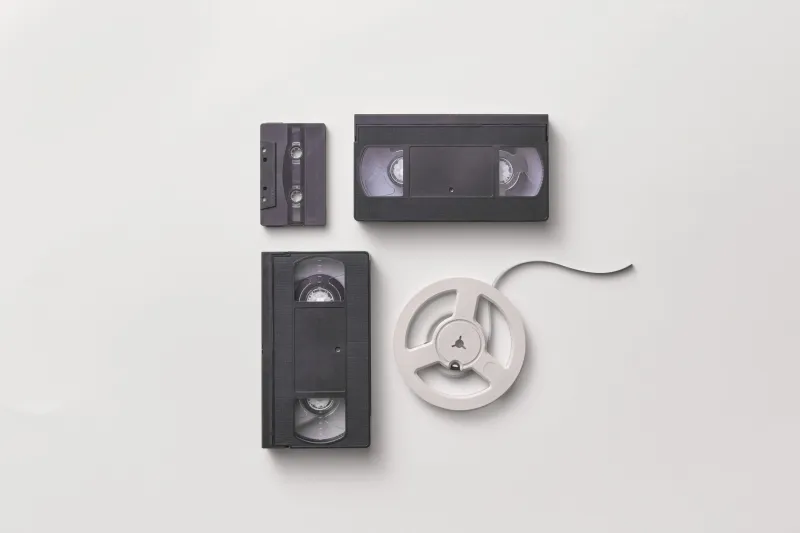
There is a particular kind of grief that arrives without announcement. It surfaces in a cardboard box at an estate sale, in a bin of unlabeled tapes outside a thrift store in Columbus or Albuquerque, in the water-warped reels discovered in a flooded basement after a family's belongings have been dispersed. These objects—VHS cassettes, Super 8 film canisters, Betamax cartridges—contain something that no institution thought to collect: the unguarded record of ordinary American life.
Now, a growing network of volunteers, community archivists, and nonprofit organizations is working to ensure that those records survive. Their tools are conversion decks, cleaning solutions, digital storage arrays, and an enormous reserve of patience. Their mission, though rarely stated in grandiose terms, amounts to something profound—the democratization of historical memory.
What Decay Looks Like
To understand why urgency drives this movement, one must first reckon with the physics of magnetic media. VHS tapes manufactured between the mid-1970s and the early 2000s are now entering what archivists call the "danger zone" of deterioration. The magnetic oxide layer that holds visual information begins to shed from its plastic backing, a process accelerated by humidity, heat, and improper storage. The result is a condition known informally as "sticky shed syndrome"—tapes that must be gently baked in a food dehydrator before playback simply to prevent them from destroying the heads of whatever machine attempts to read them.
Super 8 film presents its own constellation of problems. Celluloid is inherently unstable, susceptible to vinegar syndrome—a chemical breakdown that produces acetic acid and renders the film brittle, shrunken, and ultimately unplayable. Once the process begins, it is largely irreversible. Archivists at community digitization labs describe opening canisters and finding footage that has fused into a solid block, its images entombed beyond recovery.
The window for intervention is narrow, and it is closing.
Anonymous Footage, Collective Memory
What makes this movement philosophically distinct from conventional archival practice is its embrace of the anonymous and the incidental. Institutional archives have historically privileged the documented, the notable, the publicly significant. The home video archive inverts that hierarchy entirely.
A tape recovered from an estate sale in Gary, Indiana might contain footage of a backyard birthday party from 1987—children in pastel clothing, a sheet cake, a father operating a camcorder with visible pride. There is no famous face in the frame, no historically significant event unfolding. And yet, as volunteers who work with these materials will attest, the footage carries an almost unbearable emotional charge. It is precisely the ordinariness that makes it matter.
"These are the images that never made it into the newspaper," said one volunteer coordinator at a community digitization project in the Pacific Northwest, speaking at a recent gathering of archival practitioners. "They show us how people actually lived—what their kitchens looked like, how they spoke to their children, what music was playing in the background. That's not a footnote to history. That is history."
This perspective aligns with a broader shift in cultural preservation philosophy—one that recognizes the documentary value of everyday experience and challenges the gatekeeping traditions of formal institutions. Organizations such as the Center for Home Movies, which coordinates Home Movie Day events in cities across the United States, have helped legitimize the practice and build community around it.
The Technical Labor of Rescue
Digitization is not a simple matter of pressing play and capturing the output. For tapes in advanced states of deterioration, the restoration process can be painstaking and expensive. Volunteers must first assess each item's condition, then determine the appropriate intervention—whether that means a careful cleaning with isopropyl alcohol, a controlled baking cycle, or, in extreme cases, a frame-by-frame capture using specialized equipment.
Community labs have emerged in cities including Chicago, Detroit, Baltimore, and Portland to provide access to this equipment for individuals and families who could not otherwise afford professional restoration services. Many operate on a sliding-scale or donation model, reflecting a commitment to equity in cultural preservation. The underlying principle is consistent: the ability to recover one's own family history should not be contingent on economic means.
Color correction, audio restoration, and the stabilization of shaky footage represent additional layers of technical work, often performed by volunteers with backgrounds in film production or digital media. The cumulative effort required to restore a single hour of degraded footage can run to many hours of skilled labor.
Building a Shared Digital Commons
Once footage is digitized, the question of where it lives becomes pressing. Private storage on a hard drive solves the immediate problem of decay but does little to integrate recovered footage into the broader cultural record. Several community archiving initiatives have responded by building open-access digital repositories where restored home videos can be uploaded, tagged, and contextualized.
The Internet Archive, which hosts an enormous collection of user-contributed home movies under its Moving Image Archive, has become a critical partner for many community digitization projects. Footage uploaded to the Archive is freely accessible, searchable, and preserved through redundant storage systems—a degree of institutional durability that individual volunteers cannot replicate on their own.
Beyond mere storage, some organizations are developing metadata frameworks that allow individual recordings to be connected to broader social and geographic contexts. A birthday party filmed in South Chicago in 1979 can, with thoughtful tagging, become a document of neighborhood demographics, domestic architecture, fashion, and cultural practice during a specific historical moment. The anonymous becomes, in this way, richly informative.
The Ethics of Found Footage
The movement is not without its ethical complexities. Home videos were created within the expectation of privacy, shared among family members rather than broadcast to the world. When those families are gone, or when tapes surface without any identifying information, questions of consent and dignity arise.
Practitioners in the field have developed community guidelines to navigate these tensions. Footage that contains identifiable individuals is typically not published without reasonable effort to locate surviving family members. Images that might be considered intimate or compromising are handled with particular care. The guiding principle, as articulated by several archiving organizations, is stewardship rather than exhibition—the goal is preservation and contextualization, not spectacle.
These conversations reflect a maturity within the community archiving movement, a recognition that the ethics of memory are as important as its mechanics.
Ordinary Lives, Extraordinary Record
There is a scene that volunteers in this field describe with striking consistency: the moment when deteriorated footage resolves into clarity on a monitor, when faces emerge from static, when the sound of a long-silent voice fills a quiet room. It is, by all accounts, a moment that carries weight entirely disproportionate to the apparent modesty of the material.
This is what cultural preservation looks like at its most intimate—not the recovery of a masterwork or the rescue of a monument, but the salvage of an afternoon, a meal, a laugh shared between people who believed, as most of us do, that some things simply endure. The work of these volunteers insists that ordinary lives deserve the same archival care as the extraordinary ones, and that the full story of who we are as a nation cannot be told without them.