Grooves of Place: How Independent Record Stores Became the Unlikely Guardians of American Regional Sound
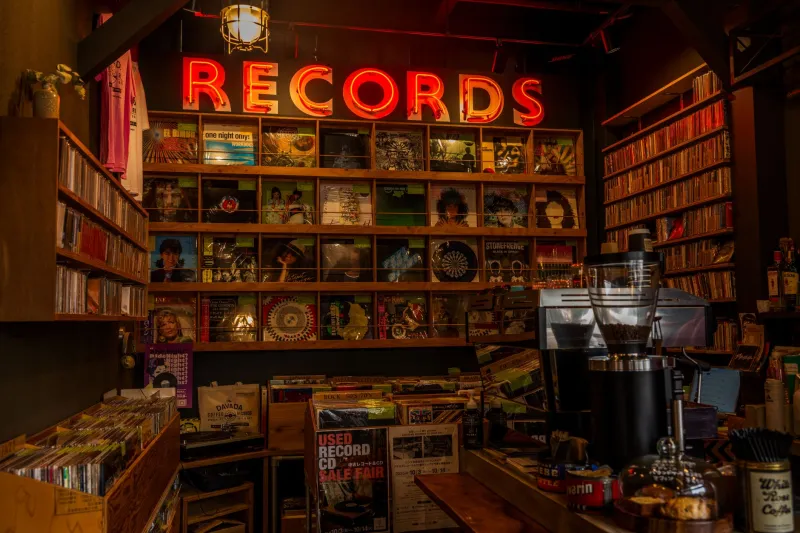
There is a particular kind of knowledge that lives in the grooves of a vinyl record — not merely the music itself, but the geography of its making. The reverb of a particular recording studio, the idioms of a regional genre that never crossed state lines, the handwritten liner notes of a pressing plant that closed decades ago. This knowledge is fragile, and it is disappearing. Yet in cities and small towns across the United States, a dedicated cohort of independent record store owners has taken it upon themselves to ensure that such knowledge endures.
These are not simply retailers. They are, in the most meaningful sense of the phrase, cultural custodians — individuals who have organized their professional lives around the belief that sound is as legitimate a form of historical record as any written document, and that the communities who made that sound deserve to see it preserved and honored.
More Than a Music Shop
Walk into Spinster Records in New Orleans' Uptown neighborhood on a Saturday afternoon, and you will encounter something that defies easy categorization. The shelves hold an extraordinary concentration of Louisiana-specific recordings: second-line brass band albums pressed by labels that no longer exist, Creole zydeco from artists whose names appear nowhere in mainstream encyclopedias of American music, gospel recordings from churches that have since been demolished. Owner Rae Guerin has spent fifteen years assembling what she describes, without irony, as "the sound of a city that keeps trying to erase itself."
"Every flood, every hurricane, every wave of gentrification takes something," Guerin explains. "But if the record exists, the moment exists. My job is to make sure those records don't end up in a landfill or scattered across the country in estate sales."
Guerin's approach is representative of a broader ethic emerging among independent record store owners who view their collections not as inventory but as archives. Many have developed informal acquisition networks — relationships with local musicians, estate attorneys, church administrators, and neighborhood elders — that allow them to intercept recordings before they are lost to institutional indifference or simple neglect.
The Geography of Sound
What major cultural institutions have historically struggled to capture is the profound regionalism of American musical life. The story of American music told through the lens of major labels and mainstream critical history is, by necessity, a story of what sold nationally. It omits entire ecosystems of local sound: the Tejano ballad tradition of South Texas border towns, the sacred steel guitar churches of the Florida Panhandle, the hyper-local hip-hop scenes of mid-sized Midwestern cities that generated significant cultural energy without ever producing a nationally charted record.
Independent record stores, by contrast, are embedded in the communities they serve. Their owners often grew up listening to the music they now preserve. In Detroit, Peoples Records on Woodward Avenue maintains one of the most comprehensive collections of Detroit techno and electro anywhere in the world — a genre that transformed global dance music yet remains underrepresented in formal archival institutions. Owner Carleton Gholz has spent years not only collecting these recordings but documenting their production contexts, interviewing the DJs and producers who made them, and sharing that knowledge with anyone who walks through the door.
"The archive isn't just the records," Gholz has noted in community presentations. "It's the conversation about the records. It's knowing why a particular bass line sounds the way it does, and who was in the room when it was recorded."
Mentorship as Cultural Transmission
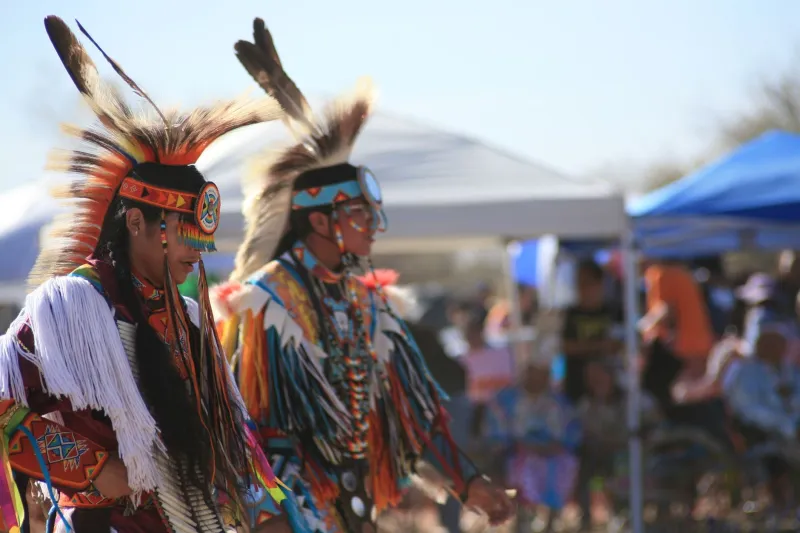
Perhaps the most consequential work these store owners undertake is the education of younger listeners — an informal but systematic practice of cultural transmission that mirrors, in important ways, the oral traditions that Indigenous communities and other cultural groups have long employed to pass knowledge across generations.
At Waterloo Records in Austin, Texas, staff members regularly host listening sessions organized around regional Texas music history, drawing connections between the city's current independent music scene and the blues, conjunto, and outlaw country traditions that preceded it. These are not academic lectures. They are conversations, often sprawling and digressive, that model for younger participants the kind of engaged, contextual listening that transforms a record from entertainment into evidence.
In Chicago, Dusty Groove America has built a reputation for stewarding the city's deep soul and funk heritage, with staff who can speak in granular detail about the differences between the Chicago soul sound of the 1960s and the disco-inflected productions of the following decade. For many young Chicagoans, particularly those who grew up in neighborhoods far from the South Side clubs where that music originated, the store represents a first encounter with their own city's cultural history.
Institutional Gaps and Community Responses
The significance of this work becomes clearer when one considers what formal cultural institutions have and have not preserved. University libraries and state historical societies have made meaningful strides in recent decades toward documenting vernacular music traditions, but their collections remain uneven — often strongest in genres that attracted early academic attention, and weakest in the areas of Black, Latino, Indigenous, and working-class musical production.
Independent record stores have, without fanfare or institutional support, filled many of these gaps. The collections assembled by dedicated store owners frequently represent the only surviving physical copies of certain recordings. When a store closes — as many have, under the economic pressures that have reshaped retail across the country — those collections are at genuine risk of dispersal or destruction.
Some organizations have begun to take notice. The Archie Green Fellows program at the American Folklife Center at the Library of Congress has supported projects documenting occupational and regional folk music traditions, and several fellows have worked in collaboration with independent record stores. But such partnerships remain the exception rather than the rule, and the preservation work being done in shops across the country continues largely without formal recognition or funding.
A Commons of Sound
What unites the store owners profiled here — and the many others doing similar work in communities across the United States — is a conviction that music belongs, fundamentally, to the people who made it and the communities from which it emerged. This conviction shapes not only their acquisition practices but the way they organize their physical spaces.
These stores are designed to be entered and lingered in. They are places where a teenager from a neighborhood whose musical history has been systematically devalued can find, on a shelf, evidence that her community made something extraordinary. They are places where an elder can bring in a record he has carried for fifty years and have someone understand immediately what it meant.
In this sense, the independent record store functions as a kind of commons — a shared space where cultural inheritance is neither commodified nor gatekept, but held collectively and passed forward. The jukebox keepers of American musical life are doing work that no algorithm, no streaming platform, and no formal institution has yet found a way to replicate. Their shelves hold what the culture could not afford to lose, and they are, day by day, making sure it is not forgotten.