Steps Passed Down: How Ballroom Houses Are Keeping Queer History Alive Through Living Tradition
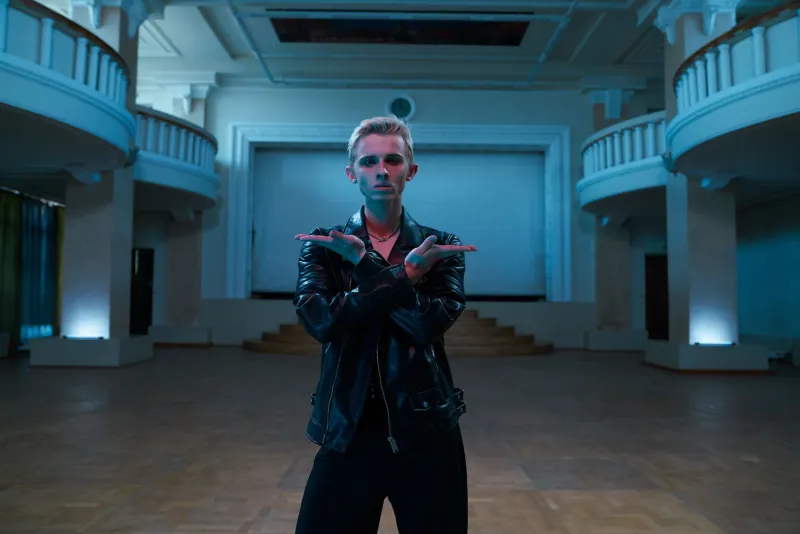
In a rented rehearsal space on the south side of Chicago, a woman known to her community as Mother Celestine is demonstrating a vogue femme arm performance to a group of young people who range in age from sixteen to twenty-two. She pauses mid-motion, not to correct technique, but to explain where the movement came from — who originated it, in which ballroom, in what decade, and why it mattered. This is not choreography class. It is, by any meaningful definition, a history lesson.
Ballroom culture — the elaborate competitive performance tradition that emerged from Black and Latino LGBTQ+ communities in New York City during the 1960s and expanded into a nationwide network of chosen-family "houses" — has long operated as its own archive. Its practitioners have preserved community knowledge not through written records or institutional collections, but through embodied transmission: the passing of movement vocabularies, survival strategies, and collective memory from one generation to the next, often across lines of profound social marginalization.
Now, as the elders of that tradition age and as mainstream cultural interest in ballroom has surged — fueled by television programs, documentary films, and fashion industry appropriation — a growing coalition of dancers, scholars, and community organizers is working urgently to formalize what has always been an informal archive. Their challenge is considerable. Their methods are instructive.
A History Carried in the Body
Traditional archival practice privileges the document: the letter, the photograph, the ledger, the recording. Ballroom culture has historically generated fewer of these artifacts than institutions accustomed to preserving dominant histories might expect. For communities navigating poverty, housing instability, police harassment, and the catastrophic losses of the AIDS crisis, the luxury of documentation was rarely available.
What survived instead was the body's memory. The specific tilt of a hand during a dip. The precise footwork pattern of a particular category. The unwritten rules governing how a house mother addresses her children during competition. These are not incidental details — they are the substance of the tradition itself, and they exist nowhere except in the people who carry them.
"When we lose an elder in this community, we don't just lose a person," says Darius Holloway, a Philadelphia-based archivist and former ballroom competitor who has spent the past six years conducting recorded interviews with house founders and veteran performers. "We lose a library. We lose decades of knowledge about what this community built, what it survived, and how it kept each other alive when nobody else would."
Holloway's project, conducted under the auspices of a community arts nonprofit, has produced more than two hundred hours of video testimony. The interviews cover not only performance history but the social architecture of house culture: how houses functioned as de facto social service networks, providing housing referrals, HIV prevention information, and emotional support to young queer people — disproportionately Black and Latino — who had been rejected by their biological families.
The House as Institution
To understand ballroom preservation is to understand the house system that structures the entire culture. Houses are chosen-family units organized around a "mother" and, in some cases, a "father," who serve as mentors, advocates, and cultural stewards for their "children" — members who may range from teenagers to middle-aged adults. Houses compete against one another at balls, elaborate events organized around dozens of performance categories that reward everything from runway modeling to vogue dancing to realness — the art of passing convincingly within a given social category.
The house system has always been, among other things, a pedagogy. Mothers teach children not merely how to perform, but how to navigate a world hostile to their existence. The knowledge transmitted within houses encompasses harm reduction, legal rights, community solidarity, and the history of those who came before.
What distinguishes this pedagogy from conventional education is precisely its informality — and its intimacy. "You don't learn this culture from a textbook," says Kezia Monroe, house mother of the House of Luminary in Atlanta. "You learn it from being in the room with someone who lived it. That's why the relationships matter so much. The relationship is the archive."
Monroe has been collaborating with researchers from a regional university to develop an oral history curriculum that can be used within houses themselves — a model that inverts the traditional archival dynamic by placing preservation tools directly in the hands of community members rather than outside scholars.
Digitization and Its Discontents
As digitization efforts accelerate, practitioners and organizers are grappling with questions that extend well beyond technology. Who owns the archive? Who controls access? How are community members compensated for their labor and knowledge? And what is lost when a living tradition is converted into a static record?
These are not abstract concerns. The history of cultural extraction from Black and Brown communities by outside institutions is long and well-documented. Several house elders interviewed for this article expressed wariness about academic or museum-affiliated projects that might claim stewardship of ballroom history without meaningful accountability to the communities that created it.
"I've seen people come in with cameras and recorders and leave with our stories, and then we never hear from them again," says a veteran performer in Detroit who asked to be identified only by her ballroom name, Legend Monique. "That's not preservation. That's mining."
In response to these concerns, several community-led initiatives have adopted governance models that require majority community control over archival decisions, revenue sharing for any commercial use of collected materials, and ongoing consultation with house elders before any materials are made publicly accessible. These frameworks draw on principles developed within Indigenous data sovereignty movements, adapted to the specific context of urban LGBTQ+ communities.
Movement as Method
Perhaps the most distinctive aspect of ballroom preservation is its insistence that movement itself constitutes a primary historical document. Organizations like the Vogue Archive Project, based in New York, are working to develop notation systems and video documentation standards capable of capturing the full vocabulary of vogue and its related styles — not merely as performance, but as historical evidence of community creativity and resilience.
This approach challenges archival orthodoxy in productive ways. If a particular arm movement was developed by a specific performer in a Harlem ballroom in 1987, and if that movement has been transmitted through direct mentorship across four decades and three generations of practitioners, then the bodies currently performing that movement are, in a meaningful sense, primary sources. They are evidence. They are the record.
"The dance floor remembers things that paper never could," says choreographer and cultural historian Marcus Vega, who consults with several community preservation projects. "It remembers what it felt like to be in that room, to be that person, to need that community as desperately as people needed it. That's history you can't get from a box in a library."
Toward a Community-Held Future
The work of preserving ballroom culture is, at its core, an argument about whose history counts and who gets to keep it. In a cultural moment when LGBTQ+ rights are under renewed legislative assault across multiple American states, the stakes of that argument are not merely academic. Communities that can tell their own stories — with fidelity, depth, and self-determination — are communities better equipped to defend their right to exist.
Mother Celestine, back in that Chicago rehearsal space, finishes her demonstration and watches her students attempt the sequence. She corrects, encourages, and explains again. When the session ends, she will write nothing down. She does not need to. The knowledge is already moving — from her hands to theirs, from one generation to the next, carried in the only medium that has ever truly belonged to this community.
The archive lives. It breathes. It walks out of the rehearsal space and into the world, wearing sequins and survival in equal measure.