Grease and Memory: The Independent Mechanics Keeping American Automotive Heritage Alive
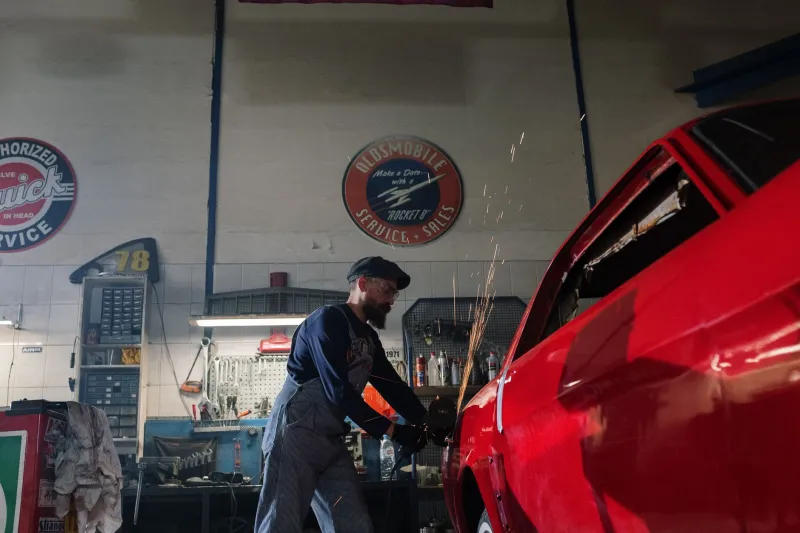
In a converted warehouse on the south side of Detroit, a retired machinist named Gerald Okafor spends most Saturday mornings surrounded by young people who have never changed their own oil. He is not teaching them to fix their daily commuter vehicles. He is teaching them to listen—to a 1969 Chevrolet Chevelle whose engine, he insists, speaks a language worth learning. "This car was built by people in this city," Okafor says, running a hand along the hood. "When you understand how it works, you understand something about who we were."
Okafor is one of thousands of independent mechanics, hobbyist restorers, and self-taught automotive historians operating outside the institutional frameworks that typically define cultural preservation. They gather in garages, community lots, and repurposed industrial spaces. They trade knowledge through informal workshops, regional swap meets, and increasingly through digital forums that function less like social media platforms and more like living archives. What they are collectively preserving is not merely machinery—it is a layered record of American industrial identity, regional manufacturing tradition, and working-class ingenuity.
A Heritage Without a Museum Wing
American car culture rarely receives the kind of sustained institutional attention afforded to other forms of cultural expression. While museums dedicated to automotive history do exist—most notably in Dearborn, Michigan, and Reno, Nevada—the vast majority of hands-on mechanical knowledge lives outside their walls. It resides in the muscle memory of aging mechanics, in hand-annotated repair manuals stacked in garage corners, and in the oral traditions passed between enthusiasts at regional car shows from Appalachia to the Southwest.
This informal preservation network has taken on new urgency as the American automotive landscape undergoes rapid transformation. The proliferation of electric vehicles, the consolidation of dealership repair centers, and the rise of software-locked engine management systems have collectively accelerated the obsolescence of older mechanical skill sets. Independent mechanics who once built careers on their ability to diagnose and repair domestic vehicles now find themselves excluded from servicing newer models by proprietary diagnostic tools available only to authorized dealers.
For advocates within the broader cultural preservation community, this represents more than a consumer rights issue. It is a question of who controls access to shared industrial heritage—and who gets to transmit it.
The Right to Repair as Cultural Advocacy
The ongoing legislative debate over right-to-repair legislation has, for the most part, been framed in economic and consumer protection terms. Independent mechanics and the organizations that support them argue that the conversation deserves a wider lens. When a manufacturer restricts access to repair documentation or embeds proprietary software that prevents third-party diagnostics, the practical effect is the erasure of a generational knowledge transfer chain.
"My grandfather could rebuild a carburetor with a set of hand tools and a Chilton manual," says Rosa Villanueva, who runs a community repair cooperative in San Antonio, Texas. "That knowledge was democratically available. It belonged to everyone who wanted to learn it. What we're fighting for now is the right to keep that knowledge in the commons."
Villanueva's cooperative, which operates on a sliding-scale membership model, hosts weekly workshops focused specifically on pre-1990s domestic vehicles. The deliberate focus on older models is both practical and philosophical. Older vehicles are more mechanically transparent—their systems are comprehensible without specialized software—and they carry deeper regional significance. In South Texas, she notes, certain truck models from the 1970s and 1980s are woven into the cultural fabric of ranching and agricultural communities in ways that newer vehicles simply are not.
Documenting What the Manuals Don't Say
One of the most consequential aspects of this informal preservation movement is the effort to document tacit knowledge—the kind of expertise that does not appear in any official repair manual. Experienced mechanics carry within them an enormous volume of procedural wisdom accumulated through decades of hands-on work: the particular way a specific engine block responds to temperature changes, the regional variations in how certain models were assembled at different plants, the improvised solutions developed when original parts became scarce.
A growing number of enthusiast communities have begun treating this knowledge with the seriousness it deserves. Organizations like the Vintage Automobile Preservation Society and various regional marque clubs have launched oral history projects, recording hours of interviews with master mechanics before that expertise is lost to time. Some groups have partnered with community colleges and vocational programs to create hybrid curricula that pair traditional mechanical instruction with documentation practices borrowed from archival and ethnographic disciplines.
In rural Kentucky, a collective known informally as the Appalachian Wrench Circle has been compiling a regional automotive archive for nearly a decade. Their focus is the distinctive body of knowledge that developed around coal country work trucks—vehicles that were routinely modified, repaired, and rebuilt far from any dealership, using whatever materials were at hand. The collective's founder, a former miner named Douglas Combs, describes the project in explicitly cultural terms. "These trucks kept this region moving," he says. "The people who kept those trucks moving deserve to be part of the historical record."
Passing the Socket Wrench
Perhaps the most visible dimension of this movement is its investment in intergenerational transmission. Across the country, community workshops oriented around vintage vehicles have become unexpected sites of mentorship, drawing together retired mechanics and young people who may have grown up without access to hands-on technical education.
Public school vocational programs have contracted dramatically over the past three decades, leaving an entire generation with limited exposure to mechanical literacy. Community-based automotive workshops have stepped into that gap with an energy and cultural specificity that formal institutions rarely match. In Baltimore, a nonprofit called Motorworks Baltimore pairs formerly incarcerated adults with high school students in a shared learning environment built around the restoration of classic American vehicles. The program's director is careful to distinguish its mission from simple job training. "We're not just teaching people to fix cars," she explains. "We're teaching people that this knowledge belongs to them. That it always did."
The vehicles themselves serve as pedagogical anchors—tangible artifacts that make history legible in ways that textbooks cannot. A 1972 Ford Torino is not merely a machine to be repaired; it is an object that carries within it the decisions of designers, the labor of assembly line workers, the aspirations of the consumers who purchased it, and the accumulated ingenuity of every mechanic who has touched it since.
The Commons Beneath the Hood
The cultural preservation community has not always recognized automotive heritage as falling within its domain. The field's traditional emphasis on fine arts, language, and indigenous knowledge systems has sometimes obscured the significance of industrial and mechanical traditions—particularly those associated with working-class communities of color, rural populations, and immigrant groups whose relationship to American car culture has been both intimate and underexamined.
That is beginning to change. Scholars of material culture and vernacular technology have increasingly turned their attention to the garage as a site of cultural production. Advocacy organizations are beginning to frame right-to-repair not only as a consumer issue but as a heritage issue, one that intersects with questions of access, equity, and the democratic ownership of shared knowledge.
For Gerald Okafor, back in that Detroit warehouse, the argument is simpler than any policy brief can capture. He watches a nineteen-year-old named Marcus carefully remove a valve cover for the first time, guided by a man in his seventies who learned the same procedure from his own father on this same side of the city. "This is how things survive," Okafor says quietly. "Not in glass cases. In hands."